
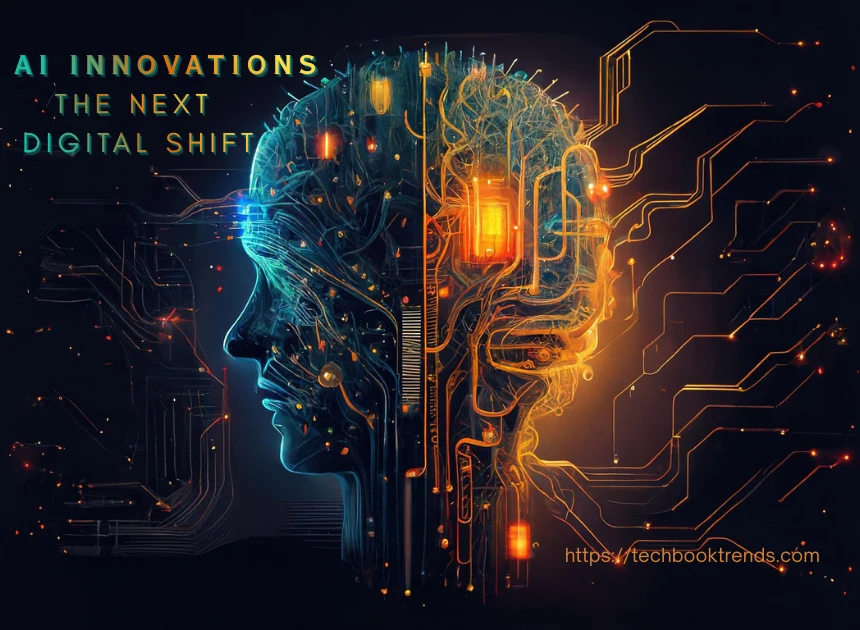
Top AI Innovations of 2026: What AI Summit Revealed About the Next Digital Shift
The technology front in the world is evolving more rapidly than ever, and the recent AI Summit 2026 made one of the most potent realizations: the new digital wave has already started. World leaders, tech CEOs, policymakers, researchers, and investors came together over three days of breakthrough announcements, big investments, and strategic global alliances to carve out the future of artificial intelligence. What came out was not another tech conference, but a historic pivot that would define the global AI Innovations economy over the next decade.
Artificial intelligence is no longer laboratory work. It has become the basis of the next-generation digital infrastructure. The summit featured new generative AI systems, innovative robotics and AI chips, and is an indicator of a new age of automation, intelligence, and economic gain.
A Turning Point for Global AI Innovation
One of the largest lessons of the AI Summit 2026 was that AI is not just for testing but is entering the field of widespread use. Generative AI, business automation, robots, AI chips, and cybersecurity systems are already making significant advances in companies.
Nowadays, it is possible to have AI models think hard, create content, and assist large businesses in their decisions. Simultaneously, AI-made chips are accelerating computers and reducing expenses. Such developments imply that AI is no longer a helper system, but rather the central component of digital systems.
According to experts, AI is being integrated into cloud computing, edge systems, and real-time analytics. This will assist in making smarter cities, superior supply chains, and highly personalized digital services.
Powerful Statements from Global Leaders and CEOs
Famous leaders’ bold predictions for the future of AI Innovations were the summit’s most memorable events.
Government Leaders
Prime minister Narendra Modi remarked that artificial intelligence must assist human beings and not supplant humans. He has emphasized that AI must be distributed to every nation, particularly the developing ones, so that they can enjoy the new technology.
United Nations Secretary-General Antonio Guterres remarked that control over AI should not remain in the possession of several large corporations or nations. He claimed that we must collaborate globally in order to ensure that AI is a common good to all, rather than a cause of increased inequality.
European leaders emphasized the need to have equalized regulations – promote innovation without making sure that people are safe, maintain transparency, and hold individuals responsible.
What global CEOs are saying
- Sam Altman, CEO of OpenAI, stated that it is the strongest tool that we have ever created and that it should be constructed in a safe way and in the best interests of everyone. He said that we should develop AI in a prudent manner and discuss regulations with other nations.
- Sundar Pichai, the CEO of Google, has suggested that AI is more fundamental than fire or electricity, and it will transform everything about how we conduct business, whether in hospitals or the manner in which we run digital services.
- Satya Nadella, Microsoft CEO, stated that AI may assist businesses in being more fruitful. He mentioned AI assistants and automation that are revolutionizing the way people work.
- Jensen Huang, the CEO of NVIDIA, the hardware involved in AI, such as AI factories and high-speed computers, is becoming an important element of a nationwide digital backbone.
- All these remarks indicate that AI is no longer a choice; it is an obligation in terms of economic competition.
Investment Trends and Economic Transformation
The AI Summit 2026 underlined several key investment plans that will impact the decade. Governments came up with multi-billion-dollar planned projects targeted at national computing centers, research centers, and startup incubators. Simultaneously, individual businesses were promising to increase data centers, AI cloud solutions, and chip manufacturing. In AI startups, VCF remained on the increase, particularly in healthcare AI, fintech automation, and enterprise productivity solutions.
AI Policy, Ethics, and Governance Frameworks
Governance was put in the limelight, besides innovation and investment. Policy makers talked about frameworks that take care of data privacy, algorithmic transparency, mitigation of bias, and accountability.
International AI standards and their significance were discussed by the representatives to avoid localization. A number of nations suggested joint studies of AI safety and the means of controlling abuse, such as the detection of deepfakes and cybersecurity practices.
Potential tools to achieve compliance and create public trust were proposed as ethical AI certification systems. Leaders were in agreement that the long-term sustainability of AI relies on the transparency and confidence of the people.
The agreement was unanimous: the new wave of digitization must have an equal amount of innovation and regulation cooperating.
Future Scope: How AI Will Reshape the Global Economy
The summit talked of a bright future of AI that will cause monumental shifts in various fields. Health care and banking AI will aid in more effective diagnosis, cost reduction, increased risk assays, and easier fraud detection.
AI will manage electricity use, transportation, and other essential services in smart cities. Schools will adopt personalized AI tutors, while factories will use smart automation to improve efficiency and productivity. In response to new dangers, computer security would be more active. High-skill positions in AI development, ethics, and monitoring will be created, even as automation may replace monotonous jobs. Overall, rather than a technological advancement, such a revolution requires a drastic economic and societal transformation.
Global Collaboration and Strategic Impact
The result of the AI Summit 2026 being highly global in nature was one of the most significant results. Having over 100 nations on board, it demonstrated that the AI plan is now intertwined with foreign policy. Countries favored collaborative pieces of research, unrestricted investments, and shared safety. Therefore, leaders acknowledged that no single nation can tackle major challenges like misinformation and cybersecurity threats on its own. Instead, they emphasized unified global cooperation as the only effective path forward.
Conclusion
The AI Summit 2026 focused on more than technology. It provided a clear vision of how the next digital transformation will be. Global executives and CEOs gave boisterous assurances, massive investments, and leaders highlighted major AI innovations and agreed on shared regulatory frameworks, marking a pivotal moment in the evolution of artificial intelligence.
AI Innovations is no longer a laboratory or test product. It is turning into a core aspect of contemporary economies. As governments and companies align their strategies, the next decade will shape how responsibly AI develops. Their decisions will determine whether AI Innovations benefits everyone fairly and inclusively.
The message was clear: a new digital revolution has arrived, and AI stands at its core.


One thought on “Top AI Innovations of 2026: What AI Summit Revealed About the Next Digital Shift”