Meta’s AI Scans Photos for Bone Structure to Catch Underage Users on Instagram and Facebook
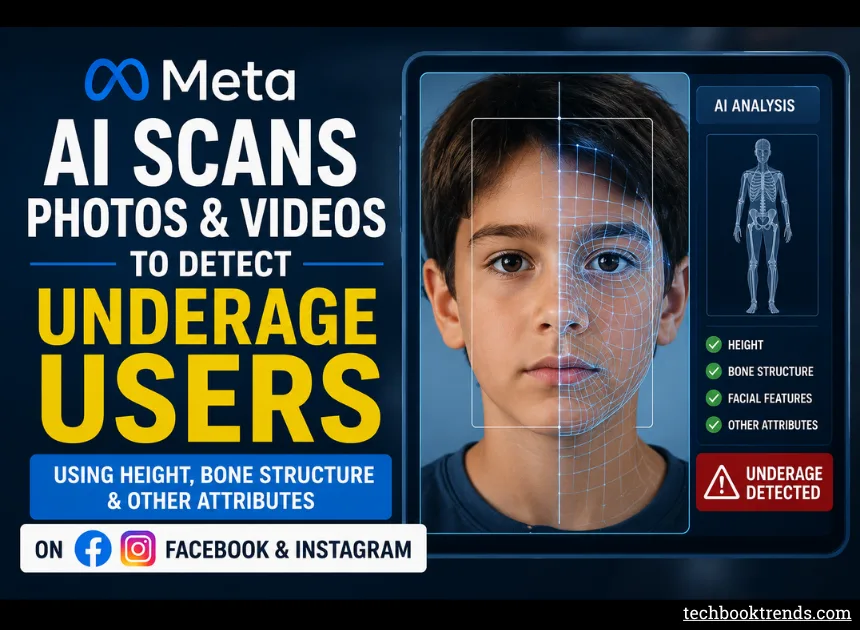
Meta has implemented a new AI system that is going to be used to enforce online safety by checking images, including photos and videos, for the user’s physical characteristics. Additionally, to determine if they are underage by measuring their height, bone structure, and other attributes.
The intention of this new system is apparent – to keep everyone younger than 13 off of Meta’s platforms. This includes platforms like Facebook and Instagram. However, users and parents alike are concerned about how this AI will work.
How The AI Will Work
Meta’s AI will not depend on users reporting their own ages. The system will analyse user posts and account activity. Additionally, their characteristics determine their chances of being an underage user.
To gather this information, the system will analyse:
- Visual cues of users’ ages, including bone structure and height
- Other aspects of what the user posts, including their photos and videos
- Images & text that are included with a post, including captions, comments, and profiles.
After collecting all the information, Meta will utilize the combined scores from these items. Then, to provide a probability that the user is an underage user. Regardless of what the user entered for their age.
The system does not utilize facial recognition, but uses a variety of identifiers from general characteristics of users.
What Happens If They Are Flagged By The AI System
If the Meta’s system believes that a user is under 13:
- The underage user’s account can be removed completely
- Their account can be put under the utmost teen safety protections
- The user will be required to verify their age
- If they are unable to verify their age. Their account will be permanently deleted from Meta.
Why Meta is taking action now
This is not just a technology upgrade. It is because of the rising scrutiny by regulators, as well as financial penalties associated with child safety.
Regulations, such as those in the European Union, and Regulators have increased scrutiny about underage children joining Meta’s platforms. Meta’s recent findings show their systems are insufficient in stopping children under the age of 13 from accessing their platforms. At the same time, most child safety violations have gone unpunished.
The rollout of AI is part of a much larger strategy to address these gaps.
Beyond just photos, the company will be scanning much more than the images. They have people’s social media accounts. The system will also scan things such as:
- Schools grades
- Enjoying birthdays
- Behavioral patterns
In essence, the company is creating a multi-layered age determination system. That uses AI throughout all aspects of the social media user’s account.
Privacy versus safety
The intent of the rollout is to improve child safety, but there are a number of factors that need to be taken into consideration as it relates to this privacy versus safety controversy.
The important questions are:
- Is looking at someone’s physical characteristics too much of an invasion of privacy?
- How accurate is AI when it analyzes casual social media photos?
- Will users get misidentified?
Meta has claimed that their system is pattern-based and is not based on anyone’s identity. It is highly probable that criticism of how they are using information and that algorithmic bias will increase.
In conclusion
Meta is developing an AI system that can scan a person’s face. This may look cool sci-fi to some and downright creepy to others.
However, it represents a huge challenge facing many social media companies today. How do we authenticate the age of users globally?
Meta’s combination of visual analysis (via AI) and behavioural analysis (via data) will help to fill a long-standing gap in terms of safety on social media.
Whether this technology becomes the new standard or creates a backlash will ultimately come down to its ability to balance protecting the user with protecting the user’s privacy.