
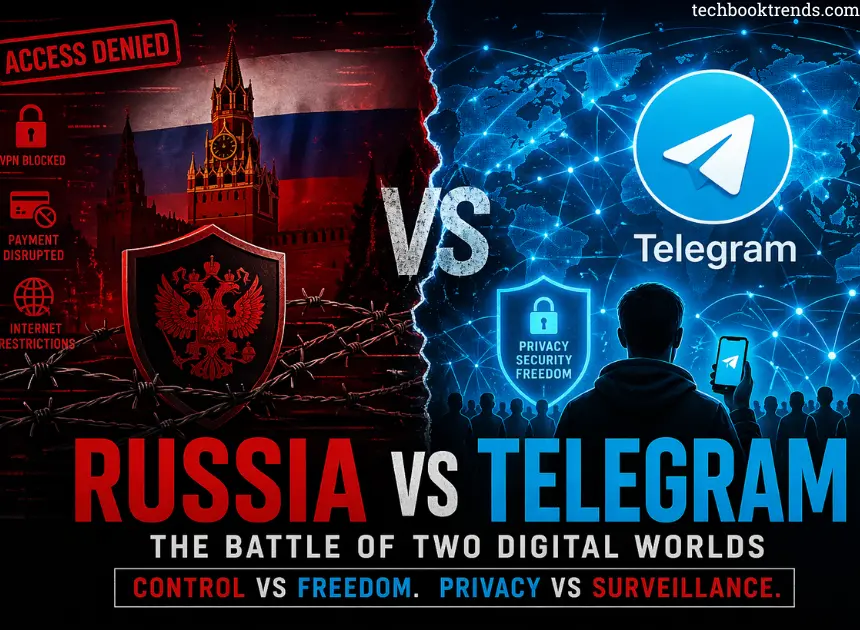
Russia Versus Telegram: The Battle of Two Digital Worlds
The conflict between Russia and Telegram has grown into a serious digital struggle in 2026. Initially, it began with simple restrictions. However, it has now turned into a broader fight over control, privacy, and digital freedom.
Trigger Events
The Russian government has taken an aggressive stance against VPNs. As a result, several online services, including Telegram’s payment systems, faced disruptions. Consequently, users experienced unexpected outages.
Despite these restrictions, many users still rely on VPNs to access Telegram. Therefore, this clearly shows how important the platform remains for daily communication.
Government Control vs Platform Freedom
On one hand, Russia aims to reduce dependence on foreign platforms like Telegram. To achieve this, authorities promote state-owned apps and limit access to international services. Because of this, Telegram has experienced slower performance, and a full ban remains possible.
On the other hand, Telegram continues to support user privacy and free communication. Thus, these opposing approaches have created ongoing tension between the platform and the government.
A Broader Digital Issue
This conflict reflects a larger global trend. In general, governments want more control over digital communication, while platforms focus on privacy and open access.
As a result, users often feel caught in the middle. In other words, they must choose between convenience, security, and freedom.
Conclusion
Overall, the Russia-Telegram conflict highlights a growing digital divide. It clearly shows the clash between control and freedom in today’s online world. Ultimately, the outcome could influence how countries regulate communication platforms in the future.
Frequently Asked Questions
1. What is the reason behind Russia taking action against Telegram in 2026?
Russia contends that Telegram is in violation of country laws, as it has not removed illegal content from its platform nor has adequate security measures to provide users with privacy. Some people, are stating that despite what the Russian government is saying, this crackdown on Telegram is merely an effort to eliminate independent voices by restricting access to communication over the internet.
2. When did the telegram crackdown begin?
The current phase in the restriction of Telegram began on February 10, 2026, when Russian authorities began limiting Telegram services throughout the Russian Federation, with additional restrictions being imposed over the next several months.
3. Is Russia trying to encourage users to use a platform other than Telegram?
Yes, Russian authorities are encouraging the population of the Russian Federation to switch to MAX (a messaging platform that is backed by the state) when using the messaging applications. MAX is very similar to Telegram, but the government has integrated MAX with existing public services and many individuals in Russia are concerned about surveillance and privacy using a state backed application.
4. How are individuals in Russia still able to access Telegram?
Many individuals in Russia have been using VPNs and proxy sites to access Telegram in Russia. Russian authorities are also regulating the use of these services, creating an ongoing war between the government and usage by individuals in Russia of communications services.
5. What does the Telegram conflict mean for the future of the internet in Russia?
The current conflict between the Russian government and Telegram represents a transition towards the government exerting greater control over the internet. The Russian Federation appears to be moving towards “sovereign internet,” in which access to the internet will be restricted to only those applications or services that are approved by the government.
Related Posts
Meta’s AI Scans Photos for Bone Structure to Catch Underage Users on Instagram and Facebook

Meta Introduces Oakley Vanguard AI Athletic Glasses to the Indian Market: Cost, Availability & Fitness Features
3 thoughts on “Russia Versus Telegram: The Battle of Two Digital Worlds ”