Qualcomm Teams Up With Neura Robotics: The Next Big Leap in AI Robotics
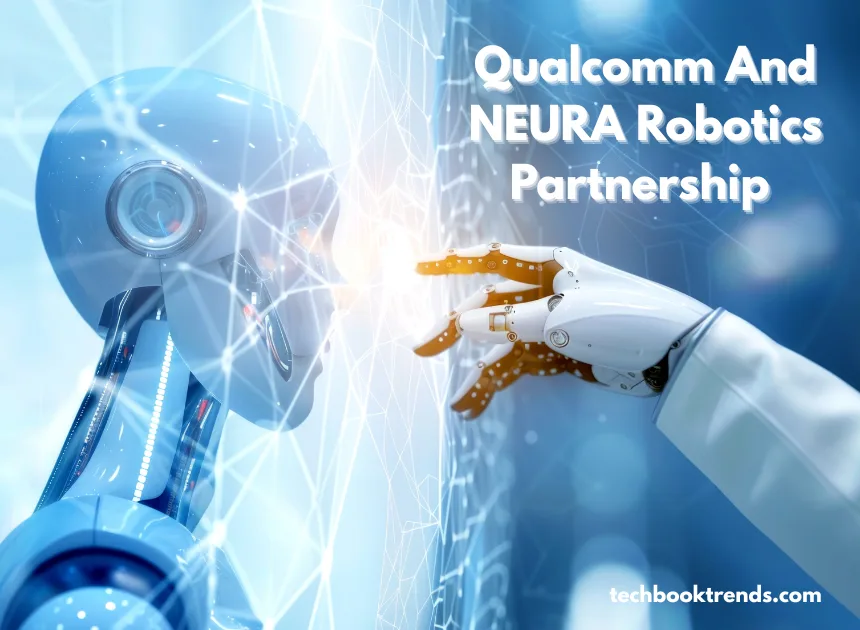
Robotics is changing very fast due to artificial intelligence. Qualcomm has formed a new alliance with Neura Robotics to make this change happen faster by creating smarter and more competent robots. This partnership would assist in the introduction of intelligent robots into mainstream industries like manufacturing, healthcare, and logistics by integrating the power of AI chips with sophisticated AI robotics.
The history of Qualcomm and its involvement in AI Chips
Qualcomm is reputable in producing high-performance processors used in smartphones, edge computers, and artificial intelligence.
Its artificial intelligence chips process large amounts of information in a short period of time and consume a small amount of power. This renders the technology of Qualcomm ideal for robots that have to survey and make decisions within seconds.
Neura Robotics and Cognitive Robots
Neura Robotics is working on constructing cognitive robots or machines capable of seeing, learning, and communicating with humans without any harm. The company creates robots that know how to perceive the environment with the help of sensors and AI. This enables them to collaborate with individuals at factories or service settings.
What Neura Robotics Partnership with Qualcomm means.
The Qualcomm Neura Robotics alliance is a combination of AI processors with powerful cognition robot platforms. The Qualcomm technology of edge AI may assist robots to analyze visual information, identify objects, and respond immediately without using cloud servers intensively. Consequently, the robots will be able to become more autonomous and effective.
The Practical Uses of AI Robotics
Some of the industries that could be revolutionized by this technology include:
- Manufacturing: Robots will be able to work together with human workers and perform repetitive tasks.
- Healthcare: AI-controlled robots can be used by physicians and nurses in hospitals.
- Logistics: Intelligent robots promise to enhance the work of the warehouse and delivery.
- Smart homes: Service robots can perform daily chores.
Difficulties and Future Prognosis.
In spite of the promising nature of the technology, there are still challenges. Before mass adoption, developers will have to take safety, reliability, and ethical issues into consideration. Nevertheless, such partnerships would help to speed up the innovation and bring more advanced robots closer to real-world applications.
Conclusion
The partnership of Qualcomm and Neura Robotics is a significant milestone on the way to the future of AI robotics. The companies will use the combination of the powerful chips and cognitive robot technology to design smarter machines that will work side by side with humans in most industries.
Frequently Asked Questions
Understanding AI Robotics and the Partnership
Q. What are the objectives behind Qualcomm and Neura Robotics collaboration?
Ans. However, Qualcomm and Neura Robotics are working together to develop advanced cognitive robotic systems using state-of-the-art (SOC) AI technologies. Additionally, will be collaborating on developing more intelligent AI-driven robots.
Q. Is Qualcomm an important player in AI-driven robots?
Ans. Qualcomm is one of the leaders in creating high-performance SOC AI chips that can process huge amounts of data in real-time on very low levels of energy . However, they are well-suited for creating robotic systems that make real-time decisions.
Q. What is the definition of a Cognitive Robot?
Ans. A cognitive robot uses AI technology, sensors, and machine learning techniques to create a robotic machine capable of seeing, learning, and interacting with people and their environments.
Applications and Real-World Use
Q. In what ways will industries utilize AI-driven robots?
Ans. Firstly, manufacturing industries can utilize AI-driven robots to perform repetitive tasks, and healthcare will utilize AI-driven robots to support healthcare professionals. Secondly, logistics industries can utilize AI-driven robots to automate their warehouse operations, and smart homes will utilize AI-driven robots to assist people with their daily activities.
Q. How does Edge-AI benefit the robots in terms of decision-making?
Ans. Edge-AI promotes on-site, real-time data processing, as opposed to off-site or in the cloud, leading to higher response times and better real-time decisions.
Q. Can robots completely replace humans at work?
Ans. Robots are not intended to replace people at work, but rather to help people do their jobs more effectively and safely by working closely with human employees.