
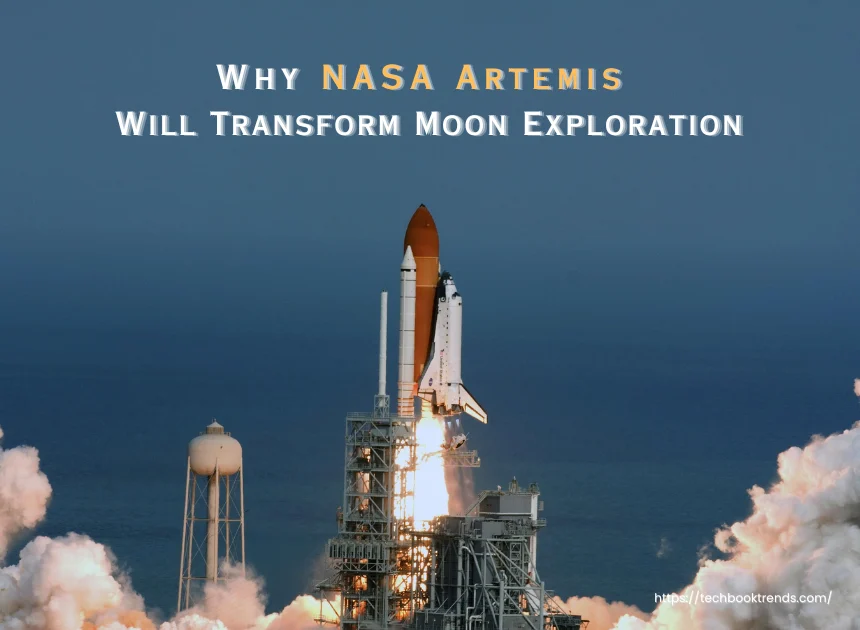
Why NASA Artemis Could Change the Future of Moon Exploration Forever
Humanity is preparing for a historic return to the Moon. This mission goes far beyond planting a flag. The NASA Artemis program aims to reshape the future of space exploration. It will build a sustainable presence on the Moon. It will also prepare astronauts for future missions to Mars.
Unlike the short-term missions of the past, Artemis follows a bold, long-term vision. It could redefine humanity’s place in space.
What Is NASA Artemis and why does it matter
NASA initiated the Artemis program to take people back to the Moon, the first in 40 years since the Apollo missions. The program is called after the Greek myth, the twin sister of Apollo, Artemis, and a new chapter in the exploration of the moon is shown.
The aim is to send the first woman and first person of color to the Moon on the Artemis III. Before that, Artemis II will orbit the moon and it will mark the first NASA-crewed deep-space mission in over 50 years.
According to NASA, Artemis can be found under the Moon to Mars program that concentrates on remaining long-term as opposed to short visits. It is not only to come back but to remain.
How NASA Artemis Is Different from Apollo
The Apollo missions of the 1960s and 1970s were pioneering and the first landing on Moon by man took place in 1969 with Apollo 11. These were short missions, much like those driven by the Cold-War competition.
The other significant distinction is international partnership. Artemis collaborates with other space organizations and businesses worldwide in a less competitive age of exploration.
The Technology Powering the Mission
The Space Launch System (SLS) is the main focus of NASA Artemis and it is the strongest rocket that NASA ever constructed. It is meant to transport astronauts and heavy loads far above the Earth.
Astronauts will travel in the Orion spacecraft, which safely carries humans to and from deep space. During Artemis I, Orion completed a successful uncrewed lunar mission and proved the system’s capabilities.
NASA is also collaborating with the services of other companies, such as SpaceX, to come up with a human landing system that will transport astronauts through the lunar orbit to the surface of the Moon. The funding and operation of space missions are changing as a result of this public-private partnership.
Building a Permanent Moon Base
Scientists think that water ice is present at the south pole of the Moon. That ice could be made from drinking water, oxygen, and even rocket fuel. In the event that this is successful, it would reduce the cost of deep-space travel by a significant margin.
There are also opportunities for scientific discoveries in a lunar base. Scientists will explore the lunar geology, radiation, and life support and these will be vital in the future Mars missions.
Preparing for Mars and Beyond
It is not the last destination of Artemis. It is a stepping stone.
NASA uses the Moon as a testing ground in its Moon to Mars program. The agency tests new technologies and life-support systems there to prepare for longer missions to Mars.
Residing and working on the Moon will demonstrate to the astronauts how to perform under extreme conditions which are far away on Earth, which will be a valuable experience of how to reach Mars safely.
Through a blend of cutting-edge rockets, deep-space spacecraft, cross-border collaboration, and business ingenuity, the Artemis program of NASA is laying the foundation of the following huge leap of humanity.
Why Artemis Is a Turning Point
NASA Artemis may transform the history of the Moon exploration permanently since it would switch the emphasis on exploration to expansion. It turns the Moon into a strategic location for the solar system rather than a destination.
This program is more than a mission. It marks the first step toward a sustainable human presence beyond Earth. If it succeeds, Artemis will return astronauts to the Moon. It will also help make Mars more accessible. New industries could emerge. Groundbreaking scientific discoveries may follow—ones we cannot even imagine today.
Man is not just going back to the moon. More than that, we are going to stay with Artemis.
Want to see how NASA plans to build a base on the Moon? Watch the Artemis mission explained in the video below.
For more space and technology updates, subscribe to our YouTube channel.


One thought on “Why NASA Artemis Could Change the Future of Moon Exploration Forever”