Is Microsoft Copilot Reliable? Understanding Microsoft’s ‘Entertainment Only’ Disclaimer
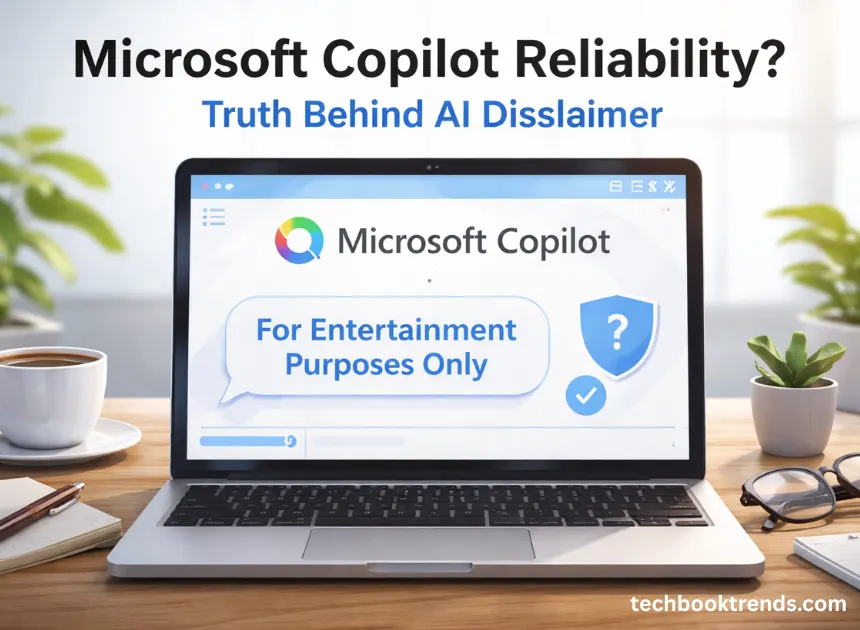
An effective AI assistant cautions users against having full trust in it. Microsoft Copilot has a disclaimer in its terms stating that it is used for entertainment purposes only. This caution is shocking, but it brings out a significant fact regarding contemporary AI tools. Systems such as these make errors, and many users are expecting correct responses.
Fundamentally, this disclaimer is restrictive of responsibility. Microsoft does not program its AI to be used as a substitute for the judgment of the experts. As such, users should not consider outputs as facts; they should be treated as suggestions. This strategy cushions the company and the user against overdependence.
But it is up to you to use the tool to be reliable. It is good for simple tasks, such as drafting emails or summarizing content. Conversely, complicated issues can cause partial or wrong answers. This is why critical thinking is still necessary.
In addition, AI models produce answers following a pattern, but do not understand. They do not know things in the way that human beings know. Instead, they estimate the most probable training data reaction. As a result, confident answers can still be wrong.
This does not render the tool useless, however. As a matter of fact, it can increase productivity when put to proper use. As an example, the users can cross-match the results and refine the outputs by follow-up prompts. The approach enhances precision and credibility.
Finally, the disclaimer imparts a plain lesson. AI should be a guide, not a decision-maker. Microsoft Copilot is most effective when combined with human decision-making. Once you remember to keep it within bounds, you can view Microsoft Copilot as a useful ally instead of a dangerous shortcut.