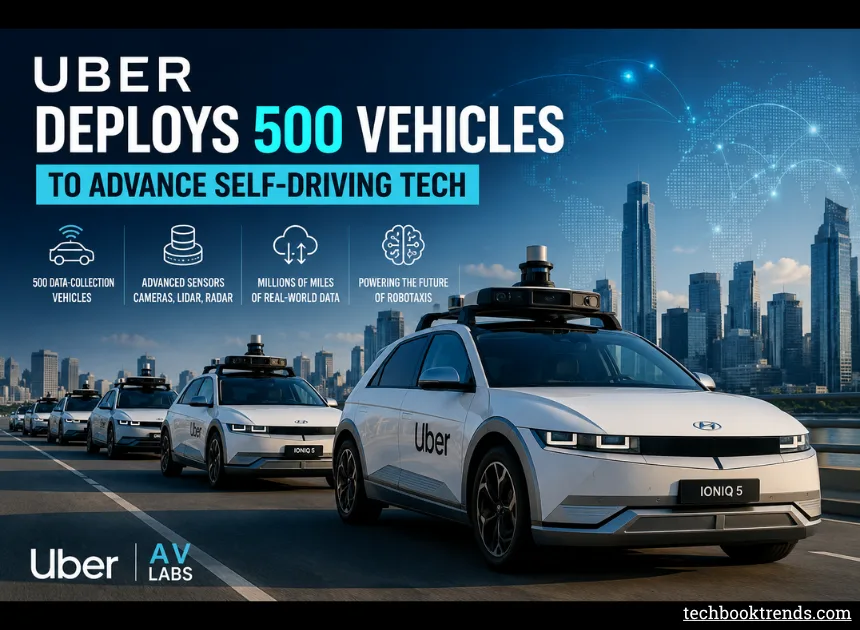
Uber to Deploy 500 Data-Collection Vehicles to Accelerate Self-Driving Technology
Uber Expands Its Autonomous Vehicle Ambitions
Uber is pushing ahead with its Uber self-driving vehicle plans a bit more than before, and honestly, it seems pretty ambitious. This week, Uber says it wants to put around 500 specially equipped data-collection vehicles onto roads worldwide sometime this year. It’s all tied to the company’s newer AV Labs division. Which is meant to back autonomous vehicle development, sort of in a practical way, not just talk.
Advanced Sensors Will Gather Real-World Driving Data
Those rides are based on Hyundai Ioniq 5 electric cars. But they won’t be “normal” Ioniq 5s. Each one is expected to come with a pretty wide suite of cameras, lidar sensors, and radar systems. In theory, this setup will snag real-world details about road surfaces, traffic flow, weather conditions, and even driver behavior. Uber also says it expects the fleet to produce millions of miles of usable driving data every month, which is a lot, even if it sounds carefully planned.
Supporting the Future of Robotaxis
Instead of Uber building its own full self-driving stack, the company says it’s taking a supporting role. The idea is to help other autonomous vehicle partners get better at what they do. The data gathered from this fleet will be shared with firms working on robotaxis and self-driving software, so they can train and tune their artificial intelligence models more efficiently. So yeah, less “Uber does everything,” more “Uber fuels the ecosystem” kind of approach.
A New Direction for Uber
This move kind of signals a big change for Uber, as it sold off its earlier autonomous vehicle division in 2020. Now, with partnerships and data-sharing initiatives, the company is trying to take up a real role in the autonomous transportation ecosystem, but without actually building its own self-driving platform from scratch.
What It Means for the Future
As rivalry in the robotaxi space gets stronger, having lots of real-world driving data is getting more and more crucial. Uber’s 500 vehicle fleet could help speed up safer and more dependable autonomous transportation services. If the effort works out, then it might boost Uber’s position in the future of mobility and in self-driving technology worldwide.