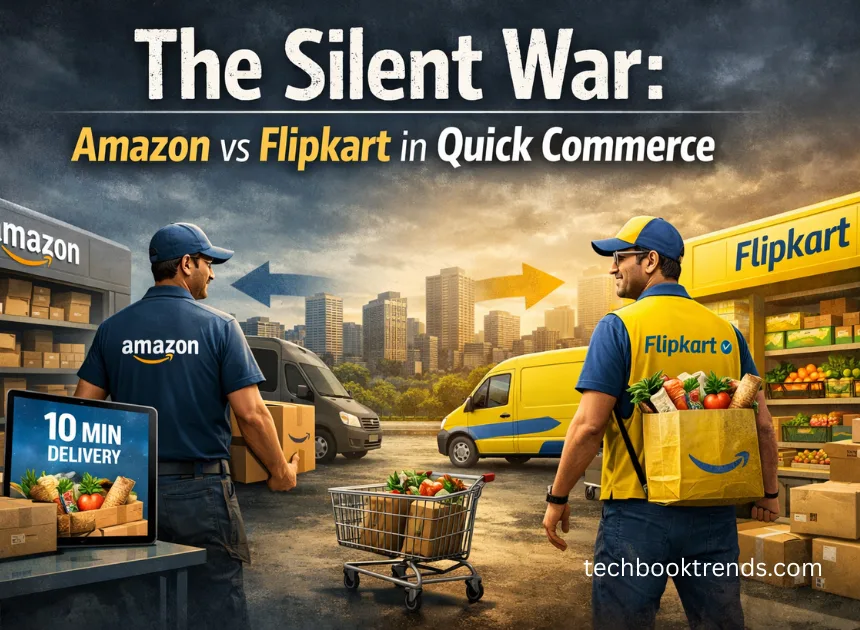
The Silent War: How Amazon and Flipkart Are Pressuring Quick Commerce Startups.
The rise of instant delivery has sparked the Silent War in India’s digital economy. What looks like convenience hides a fierce battle for control. Giants like Amazon and Flipkart have entered quick commerce with speed and intent. As a result, startups now face pressure from every direction.
Initially, quick commerce startups built their identity on ultra-fast deliveries and hyperlocal focus. However, Amazon and Flipkart quickly adapted and scaled those same models. They used existing warehouses, logistics networks, and strong funding to move faster. Consequently, they now compete directly in the 10-minute delivery segment.
Moreover, pricing has become a major weapon in The Silent War. Big players offer heavy discounts and absorb losses to gain market share. In contrast, startups struggle to match these aggressive strategies. Therefore, their margins shrink while customer expectations continue to rise.
At the same time, user experience drives this competition forward. Amazon and Flipkart invest heavily in smooth apps and fast checkout systems. As a result, users prefer reliability over experimentation. This shift forces startups to rethink design, speed, and overall service quality.
However, startups still hold some ground in niche and hyperlocal markets. They understand local demand better and adapt quickly to changing needs. For example, many focus on specific categories like groceries or essentials. Thus, they create loyal customer bases despite growing competition.
In the end, The Silent War will define the future of India’s quick commerce industry. While big companies expand aggressively, startups must innovate to survive. Otherwise, they risk fading in a market that rewards scale, speed, and consistency.