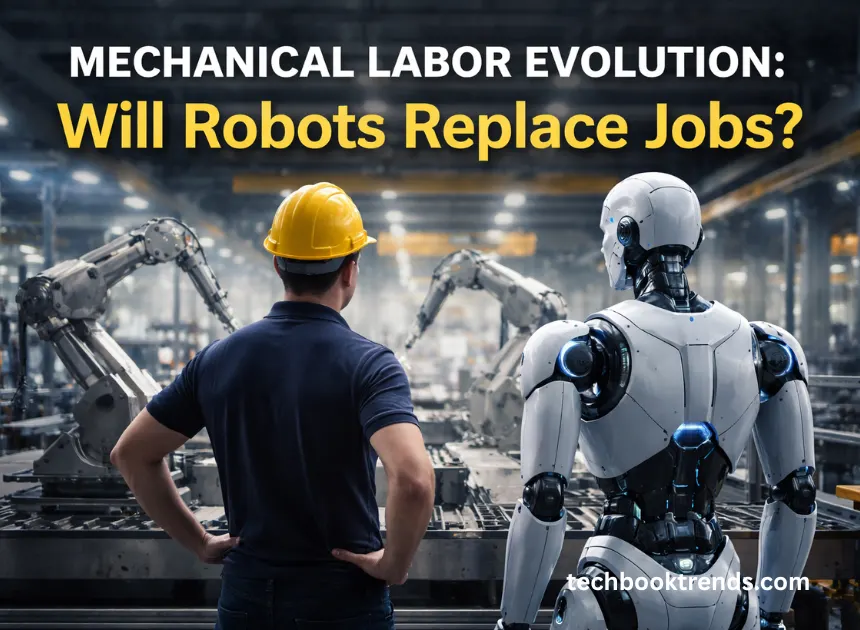
Mechanical Labor Evolution: Will Robots Replace Human Jobs Faster Than Expected
Machines no longer wait to be told what to do; they learn, adapt, and do things at a quicker rate than people. Mechanical Labor Evolution is gaining momentum, and many people are afraid that it will take away jobs earlier than they would have thought. But the fact is not as simple. Technology transforms work and does not just kill it. Thus, it becomes crucial to comprehend this change both to workers and businesses.
Robots such as Figure 01 already have the ability to perform repetitive tasks, with precision and speed. They minimize errors and enhance productivity in industries. As a result, companies rely more on automation to stay competitive. Still, these machines require human control, innovation, and choice.
Meanwhile, AI workforce agents perform the tasks of the mind that were previously the domain of the human. They interpret information, support clients, and streamline processes. As a result, there is a constant blurring of the line between physical and digital labor. This change is a new step in Mechanical Labor Evolution, when intellect is as important as power.
Nevertheless, loss of jobs does not occur as fast as headlines would indicate. Roles do change and require new skills instead. Those workers who embrace technology tend to be more successful. Indicatively, there is a demand in the workforce in many industries to manage, train, or work with AI systems.
In addition, Human attributes remain difficult to imitate. Creativity, empathy, and ethical judgment drive meaningful work. As machines do repetitive work, human beings are concerned with innovation and strategy. Therefore, the labor force does not vanish; it evolves.
Finally, Mechanical Labor Evolution heralds not substitution. The future may be a mixture of machine efficiency and human intelligence. The learners, adapters, and evolvers will remain on top of this changing scene.
Frequently Asked Questions
Q. What does the term mechanical labour evolution mean?
Ans. Mechanical labour evolution means moving labour from being performed by humans to being done more efficiently with robots.
Q. Are robots replacing jobs quicker than in the past?
Ans. Yes, robots are being implemented faster now due to improvements in technology through artificial intelligence and automation, especially where a lot of the work is repetitive.
Q. What types of jobs will robots be replacing?
Ans. Jobs that involve repetitive, predictable tasks such as manufacturing, data entry or customer service that are basic in nature are most prone to replacement.
Q. Will robots take the jobs humans do?
Ans. No, robots are likely to take specific tasks within job categories, rather than replacing entire job categories. Many job duties will change rather than disappear.
Q. Will robots create new jobs when they take old jobs?
Ans. Yes, while some jobs will be lost, new jobs will be created in fields such as artificial intelligence, the field of robotics and advanced technology.
Q. Why are companies implementing robots into their company so quickly?
Ans. Companies implement robots in order to save money and to enhance productivity, as well as provide an increase is speed without fatigue or error.