Interface Evolution in SaaS: From Static Dashboards to Dynamic AI Agents
Software is learning to listen, not just see. The era of dashboards is fading fast. Interface Evolution is transforming the SaaS into something fluid and human. Users do not have to go through menus; instead, they speak in simple language to demonstrate intent. The change signals a greater change in the way individuals relate to technology.
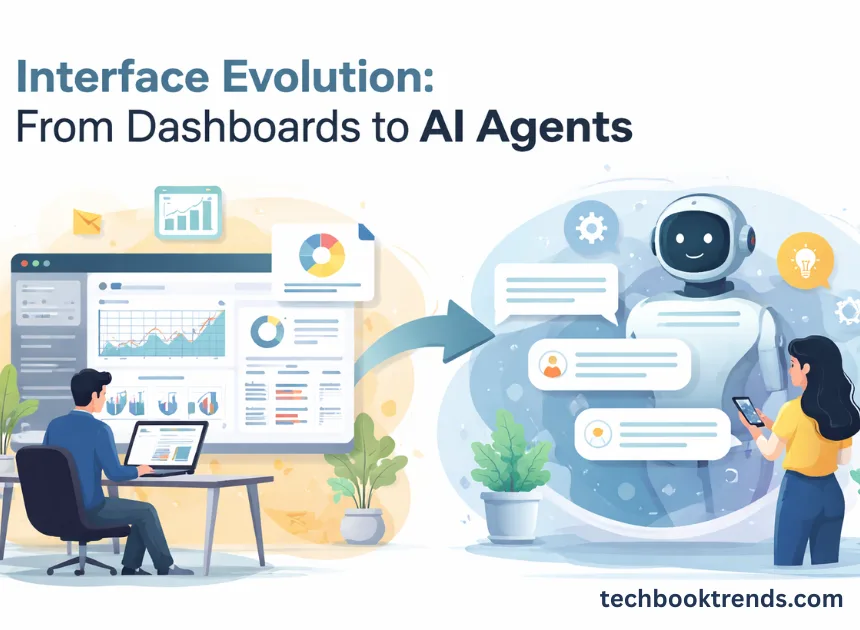
Conventionally, SaaS platforms used structured dashboards loaded with charts and controls. These interfaces could, however, be time, training, and attention-demanding. Users were forced to search, screen, and analyze data manually. Consequently, decision-making was sluggish, and productivity was low.
However, now, AI agents are transforming that experience by being dynamic. Users do not have to go through layers; they only need to ask questions. The system reacts with insights, actions, or recommendations in real-time. Further, such agents are context learners, and every interaction becomes smarter and quicker.
This shift indicates the second stage of Interface Evolution involving intent-substituting interaction. Users no longer need to adjust to software; instead, software adapts to them. The experience thus becomes more natural, and it minimizes cognitive load and increases efficiency. Even a complex workflow can be handled more easily with conversation.
This shift requires a new design mentality, as far as UX is concerned. Designers have to pay attention to transparency, direction, and reliability. They form discussions and results instead of constructing screens. In the meantime, businesses get more engaged and onboarded.
Finally, there is the concept of the future of interfaces, where the interface is barely visible, known as Interface Evolution. SaaS solutions will act like intelligent partners instead of fixed platforms. Companies that adopt this trend early will dominate the next wave of digital experience.