How AI Is Moving Beyond Screens: The Rise of Robotic
The world once viewed AI through screens, but that view is rapidly changing. Today, Robot hardware is pushing intelligence into the physical world, where machines can see, touch, and act. This shift marks a bold move from passive software to active systems that interact with real environments. As a result, AI feels less like a tool and more like a presence.
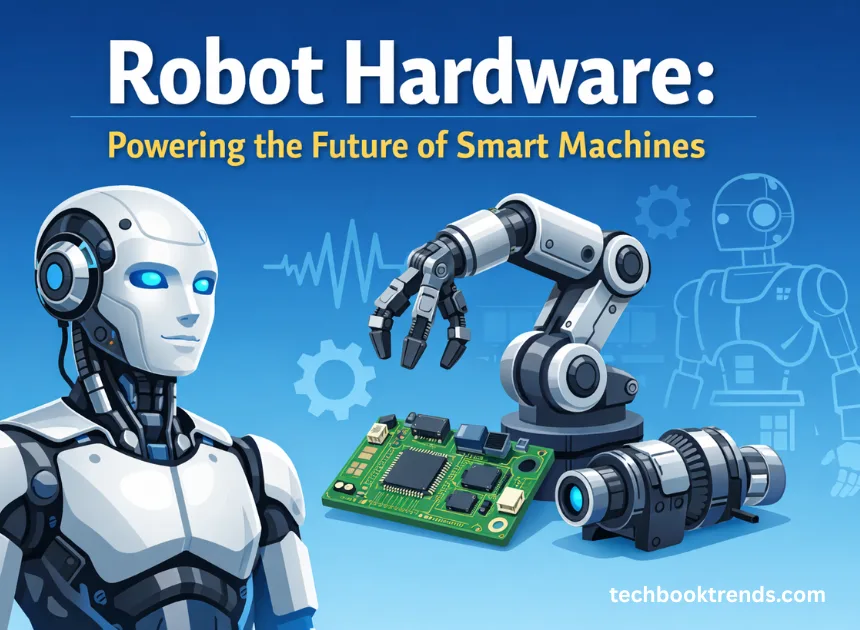
Traditionally, AI lived inside apps, websites, and chat interfaces. However, it could not physically respond to the world. Now, robotic hardware bridges that gap by combining sensors, processors, and mechanical systems. These components allow machines to understand their surroundings and react instantly. Consequently, AI no longer depends only on screens to deliver value.
Moreover, robotic systems rely on advanced AI nervous systems to function smoothly. These systems connect perception, decision-making, and movement in real time. For instance, a humanoid robot can recognize objects and adjust its actions accordingly. This creates a seamless loop between thinking and doing. Therefore, interactions become faster, smarter, and more natural.
In addition, user experience improves when AI enters the physical space. People can interact through gestures, voice, and movement instead of typing commands. This makes technology feel intuitive and accessible to more users. As a result, industries like healthcare, logistics, and retail are seeing major transformation. Physical AI enhances both efficiency and engagement.
Meanwhile, companies are investing heavily in humanoid robots and smart machines. These innovations aim to handle real-world tasks with precision and adaptability. Unlike static software, robotic hardware learns from dynamic environments. Thus, it continuously improves performance over time. This evolution signals a major leap in how humans and machines collaborate.
Ultimately, AI is no longer confined to digital boundaries. It is stepping into reality through robotic hardware and embodied intelligence. This transition reshapes how we work, interact, and solve problems daily. Looking ahead, the line between digital intelligence and physical action will continue to fade.