YouTube’s Strategy to Keep Top Creators From Being Lured Away by Netflix
YouTube spent over a decade building the launchpad for digital creators, but the playground is changing. As subscription services like Netflix start eyeing creator-led content to hold subscriber interest, YouTube faces a new problem: keeping its biggest stars from jumping ship.
This isn’t just a squabble over where a video gets uploaded. It comes down to cold, hard cash, global reach, creative control, and long-term leverage. YouTube’s response is a classic mix of sweetening the deal while subtly reminding creators what they stand to lose if they walk away.
What Each Side Brings to the Table
YouTube’s main advantage is still pure scale. A creator can drop a video and hit millions of viewers across the globe overnight without clearing a single studio pitch, licensing hurdle, or region lock. That friction-free access to an audience is tough to replicate. Beyond raw views, YouTube gives creators a system to monetize that audience from every angle—ad revenue, paid memberships, direct fan funding, and integrated storefronts.
Netflix, on the other hand, sells prestige and production value. It offers multi-million-dollar budgets, traditional production crews, and access to hundreds of millions of subscriber living rooms. For a creator who has spent years talking into a camera in their bedroom, a Netflix deal feels like a step up the entertainment ladder—a chance to make a polished documentary, a scripted series, or a high-end reality show.
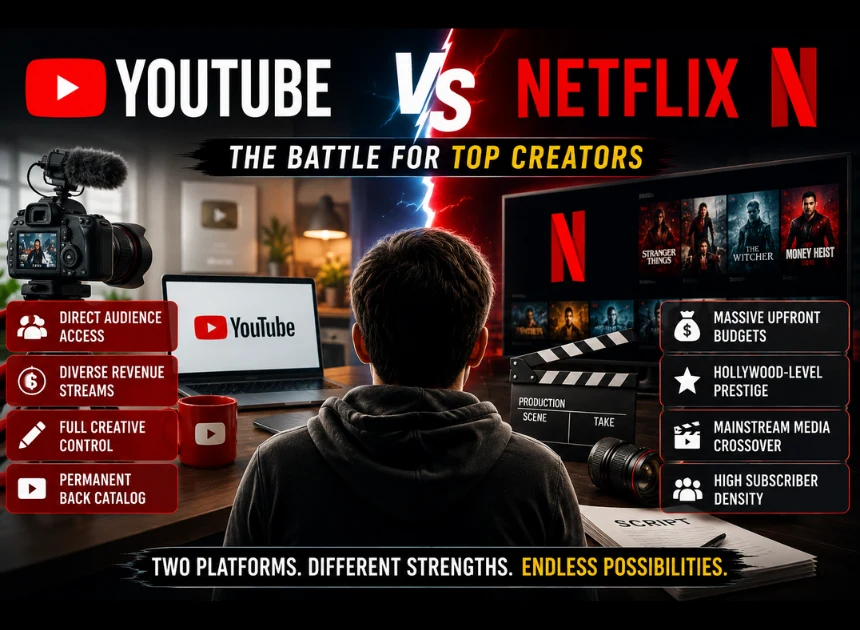
| THE PLATFORM TRADE-OFF | |
| YOUTUBE | NETFLIX |
| • Direct audience access • Diverse revenue streams • Full creative control • Permanent back catalog |
• Massive upfront budgets • Hollywood-level prestige • Mainstream media crossover • High subscriber density |
Why YouTube Can’t Afford to Lose Top Talent
Losing a few big names isn’t just a blow to YouTube’s ego; it directly hits the bottom line. Top creators drive huge chunks of total watch time, keep users opening the app daily, and anchor the platform’s culture. When a major host leaves, they take a chunk of their audience’s daily habits with them. On top of that, top talent sets the tone for the next generation of creators who copy their formats, gear, and business strategies.
The Strategy: Carrots and Friction
Instead of outright banning talent from taking outside deals, YouTube focuses on making its own ecosystem too profitable and deeply rooted to leave behind.
-
The Carrot: YouTube keeps layering on new revenue tools. The goal is to make sure a channel operates like a multi-product business, not just a stream of ad reads. If a creator makes money from YouTube Premium views, channel perks, shoppable links, and direct sponsorships all at once, a one-off check from a streamer starts looking less transformative.
-
The Friction: The hidden cost of walking away from YouTube is massive. Leaving means walking away from a fine-tuned recommendation algorithm, years of search dominance, a built-in community feed, and an archive of past videos that generates passive income 24/7. Rebuilding that setup on a subscription streamer is nearly impossible.
The Dual-Platform Play
For most creators, the smartest move isn’t picking a side anyway. The modern media playbook is to use YouTube as the home base—the place where you keep full control over your brand and maintain daily contact with fans—while taking traditional streaming deals on the side as high-profile projects.
Ultimately, YouTube doesn’t need to lock creators into exclusive cages. It just needs to remain the most reliable engine for building a long-term media business. As long as YouTube stays the best place to find an audience and turn it into a sustainable career, its top stars will always have a reason to hit “Upload.”